
Equipment Guide
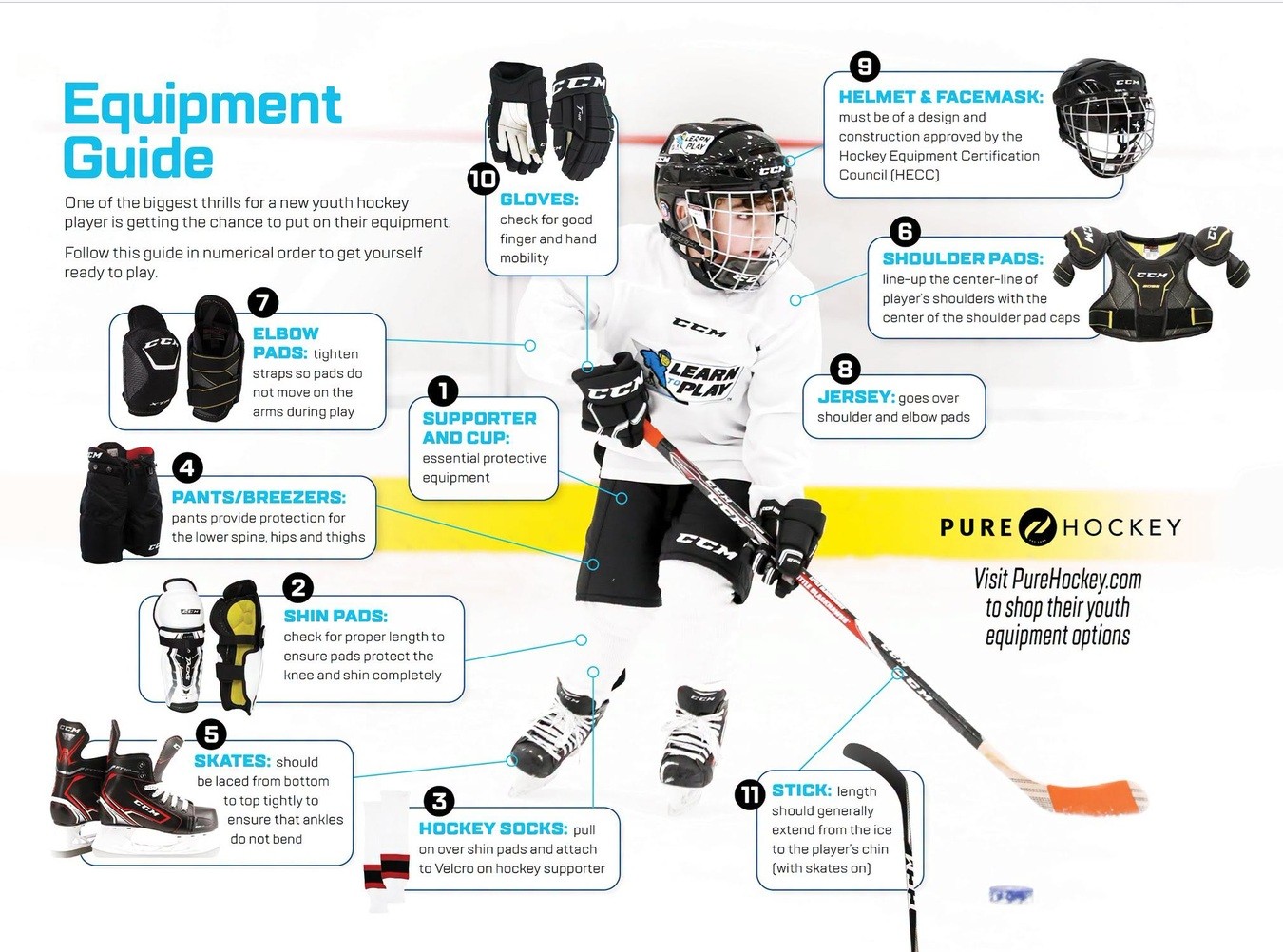
New to Hockey?
Welcome! It can be overwhelming to look at that big shipment from Pure Hockey. How do I dress my player????
First things first: Have your child put on compression pants or long underwear. Socks that fit well. Breathe. The visual guide above and the video will help. Once you get to the rink, we will also be there to help you! You are not alone.
Returning Hockey Parent?
You might be wondering: How you can I tell if my player has outgrown their equipment?
Helmet: The helmet should fit snugly without being painfully tight. If the helmet is too small, the player will complain about pain. Most helmets have a little slider on the side to adjust the size. If you already did that last year, it's probably time to buy a new helmet. But don't buy too many sizes up to save money. There is nothing like a "helmet to grow into." If the helmet is too big, you risk injury as the helmet could come off in action. It has to be the right size. A player only has one brain.
Shoulder pads: The shoulder caps should sit correctly on the shoulders, and the pads shouldn't slide around when your player moves. If their movement is restricted you know it's time for the next size up.
Elbow pads: The elbow should sit securely inside the elbow cup. If the elbow can move out of the cup, the pad isn't doing its job.
Pants: Hockey pants should provide good coverage without falling down or restricting skating. If you see too much space between pants and shin guards, it means the pants are too short and they won't protect your player.
Shin guards: The knee should sit properly inside the knee cup, and the shin guard should extend down toward the skate. (Some players like to tuck the shinguards into their skates and others prefer them to be on top of the skates. There is no right or wrong.) If the shinguard ends half way up the shin, it is too small.
Gloves: Fingers should reach close to the ends of the finger compartments without being painfully cramped. If fingers are jammed against the ends, it's probably time for larger gloves. Also make sure the wrist is fully protected in case of a fall. Youth players fall a lot, it's part of hockey.
Skates: The skates should fit snugly, hold the heel securely, with enough room for the toes to move slightly, they should not allow the foot to slide around, and they should feel comfortable when properly laced. Don't buy skates several sizes too big in hopes they can grow into them. A player needs to be able to control the skate. Too much extra room makes skating harder and will lead to discomfort and blisters.
Stick: For young players, the stick should generally come somewhere around the face/chin area when they're standing on skates. Anything smaller should be retired to basement/ floor hockey or cut down to become a new knee hockey stick.
Cups (jock or jill): if they feel to small, they probably are too small.